• HOME
  • ABOUT
  • STORE
  • JOURNAL
  • COMMUNITY & MEMORIES
  • CONTENT STUDIO
  • EVENTS
  • CONTACT
Sumac Magazine
  • HOME
  • ABOUT
  • STORE
  • JOURNAL
  • COMMUNITY & MEMORIES
  • CONTENT STUDIO
  • EVENTS
  • CONTACT

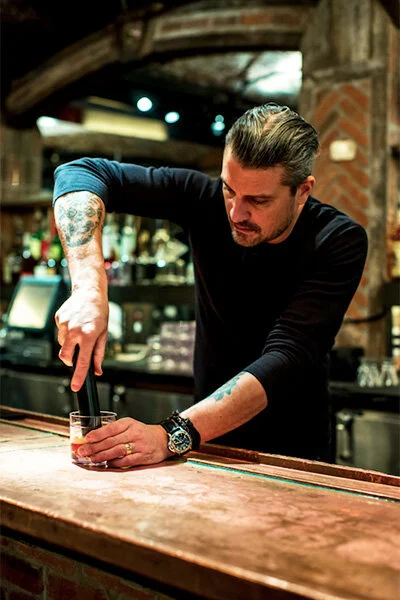
“Imbibe Your Memories” with mixologist Yusef Austin

tca-yusef-mug-color-muted.jpg

Our regular interview series kicks off with the genius mixologist behind the The Cocktail Architect. On October 9th, they invite you to a journey to the Island of Mauritius. For the first event of Bon Voyage Aloha, a "destination" cocktail club, they’ve created 4 flavor-bending cocktails, each with a story behind it, based on Nandini’s home, Mauritius, the folklore, and the mix of African, Indian, Chinese and French flavors.  Yusef answered our “Imbibe Your Memories” which features Kate Moss and Naomi Campbell cameo .


What's your favorite bar memory? 

I might get in trouble for the first choice, so I go with my second choice which is... I was creating cocktails for a "private" event near Capri, Italy on a ship for a birthday party. Naomi Campbell and I ended being the last of our friends on a Saturday night, so she asked me if I wanted to grab burgers and a bottle of Dom Perignon at 2am, below at the bar which was closed. We got someone in the kitchen to make us burgers and the bottle came out very cold and we had the bar to ourselves while we talked about life. She was super cool and so down to earth!

What's the funniest thing ever happened to you at the bar?

I was working at Mercer Kitchen/Hotel back when it was hot and sexy, when Sub Mercer was rocking! I was so sick of making Mojitos as they were all the rage and time consuming if you make them properly. Kate Moss came up to the bar and asked me what I was shaking. I said another freaking Mojito, LOL. She said, “I want to try one”. So, I made her one and when I saw her walking past me later with drink in hand, she said "The best fucking Mojito I’ve ever had. Safe to say I had to make a lot more of them that night.

What's the most regrettable cocktail you've had and what happened? 

A margarita at a Mexican joint. No sweetener, just pure lime and tequila. It was so bad I had to give it back. I just went for something else. If you can’t make an excellent margarita at a Mexican joint, it means there’s not much future for you in the drink making business.

If you name a cocktail after your ex what it would be? Why? 

Something fun, sexy and well balanced. I’m friends with all my ex's!

 What's your favorite drink after good sex? 

Seltzer with a hibiscus and fresh lime syrup. Mixed well and super bubbly!

thecocktailarchitect.com

Tuesday 10.08.19
Posted by Ali Tufan Koc
 

Sumac Salon 1 - Lex Empress

On a cosy winter evening in the heart of Brooklyn's Crown Heights neighborhood, our Managing Editor, Max Marshall, curated a delicious, vegan sampling of home cooked dishes from his Moroccan-Israeli restaurant at the Téva Eco Retreat in Costa Rica. Our guests, who hailed from across the globe, indulged their love of good food while sharing their passion for experiencing life through the wide rainbow prism of gender expression and sexually identity, in a pointed conversation led by our Editor in Chief, Ali Tufan Koç. 

At the end of an enlightening conversation, Lex Empress and Gilian Baracs—talented Dutch performers visiting us from their home in Ibiza—treated the group to a spectacular improvised musical interpretation of the nights themes

lexempress.com

Wednesday 04.04.18
Posted by Signe Birck
 

Warning: This recipe will self-destruct in five minutes.

Words: Ali Tufan Koc | Illustration: Martin Justesen

BananasFoster2.jpg

There just so happens to be a single dessert that encapsulates an entire city’s culture. Hot and drunk, a sweet and mildly tart, Bananas Foster is the dessert manifestation of New Orleans. Just a small bite will convince you that they both carry the same sweetness and drunkenness. Bananas flambéd in rum, flames shooting high from the pan in front of restaurant guests might sound cheesy and cheap, but this is New Orleans we are talking about. Only in New Orleans,  can flambéing become a bittersweet poetic tribute to the culinary history of the city. The story of how this dish came to be is recounted in Miss Ella of Commander's Palace, a new memoir by New Orleans restaurateur Ella Brennan:

“At the time Owen Brennan, Ralph Brennan's uncle, owned Brennan's Restaurant, and his sister Ella managed it. Owen told Ella to come up with a special new dessert for a dinner that night in honor of the New Orleans Crime Commission chairman, Richard Foster. ‘Damn you, Owen,’ Ella replied. Feeling a mixture of frustration and panic, she dashed into the kitchen. "While fussing and carrying on, she just grabs the bananas," explains her daughter Ti Adelaide Martin, now co-owner of Commander's Palace, also in New Orleans. "[They] were probably just sitting right there, readily available." Ella decided to sauté them, remembering a dish of caramelized bananas that her mother often made for breakfast. She was also inspired by the popular baked Alaska dessert at a rival restaurant and thought, "Why don't we flame it like Antoine's?" says Martin. The newly christened "Bananas Foster" was a huge hit at dinner that night.”


Miss Ella’s Famous Bananas Foster Recipe

SINGLE BATCH (SERVES 2-4)

1 ounce butter

1/2 cup light brown sugar

1/4 tsp cinnamon

1 1/2 oz banana liqueur

1 1/2 oz aged rum

1/2 banana per customer

METHOD

Combine butter, sugar, and cinnamon in a flambé pan. As the butter melts under medium heat, add the banana liqueur and stir to combine. As the sauce starts to cook, peel and add the bananas to the pan. Cook the bananas until they begin to soften (about 1-2 minutes). Tilt back the pan to slightly heat the far edge. Once hot carefully add the rum, and tilt the pan toward the flame, to ignite the rum. Stir the sauce to ensure that all of the alcohol cooks out. Serve cooked bananas over ice cream and top with the sauce in the pan.

Wednesday 01.31.18
Posted by Areli Pino
 

Six Questions with Massimo Bottura

Words: Ali Tufan Koc | Photography: Signe Birck

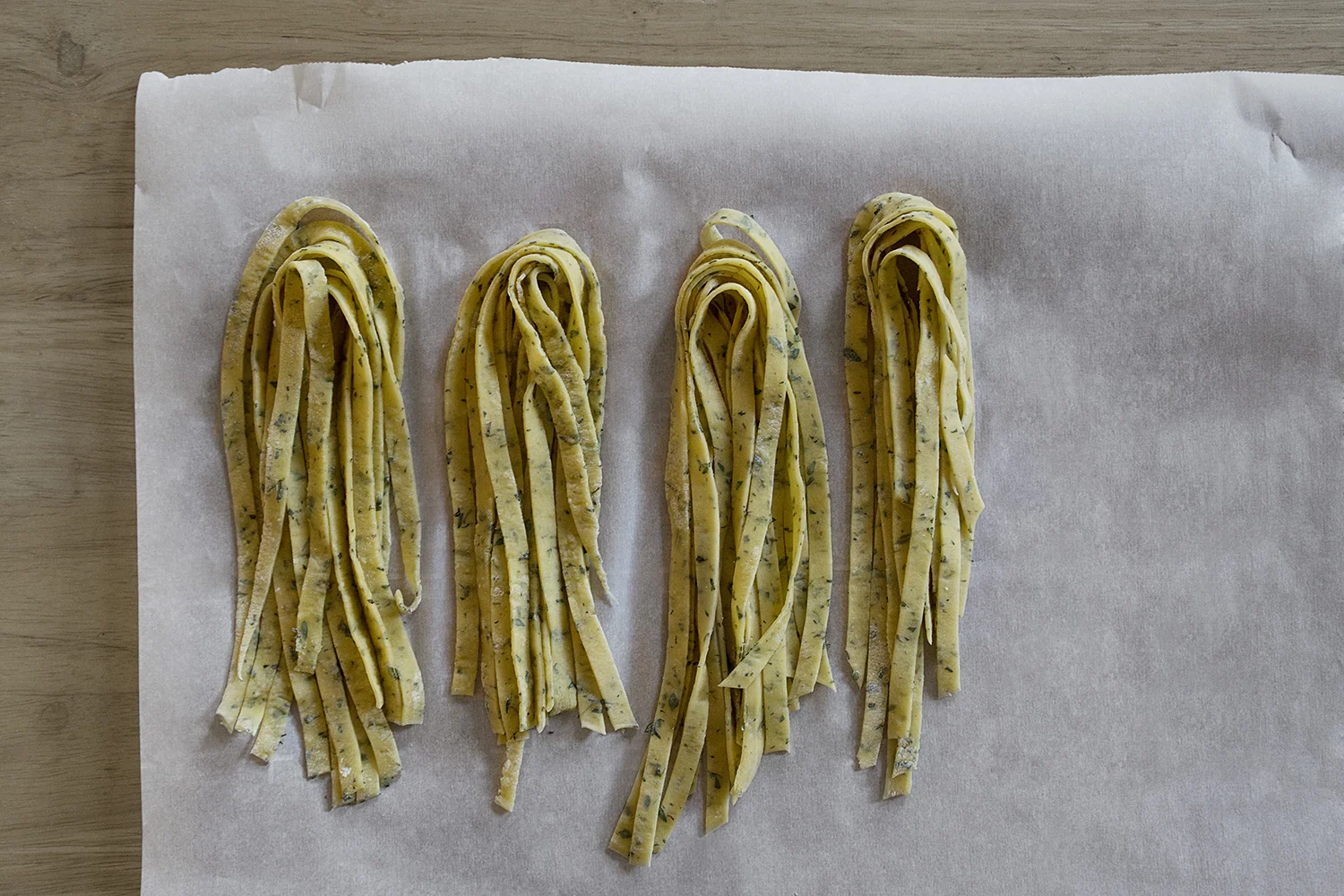
Pasta-Blog-Sumac.jpg

A skinny, Italian chef named Massimo Bottura insists that we should never trust him.

Where does the first spark of chef thinking come from?

I didn’t choose to become a chef, it just happened. I like to think that the profession chose me. I don’t know if given the choice, whether I would become a chef or not. The hours are terrible, you have to sacrifice everything, and there are no guarantees. I certainly wouldn’t advise my daughter or son to enter into this profession but at the same time, I cannot imagine doing anything else.

People’s creative ideas come from different places: dreams, books, and memories. Where do your ideas come from?

Creativity happens at the most unexpected moments.

I will be watching a film, walking the dog, or listening to a record on the turntable. Inspiration comes from the world around me. You have to be ready to catch the flash in the dark though because it only passes once. I often advise young chefs to read, travel and dig as deep as they can into their culture to understand who they are and where they come from. Then and only then can you discover your true motivations, passions, and inspiration. This is what I have done over my 30-year career.

I safeguard my sensitivity in this competitive world by balancing who I am today and where I have come from. I often say, “To create, you have to know everything, and forget everything.”

Living in the present but never forgetting all that came before you. It is so important to fill one’s suitcase with culture, books, music, literature and art, travels and then, kitchen experience. Cooking is only not manual labor but also a thinking man’s job. One of the most valuable ingredients or tools in the kitchen, and one often left behind, is the mind….and if you really think about it, the only 0 kilometers cooking going on is taking place in our minds.

Do you have periods where you to research? Are there different kinds of research depending on the different menus?

We are researching all the time and experimenting with our ideas. We never stop thinking, looking and creating. It very is important to the contemporary kitchen to stay fresh, alive and creating new dishes. It is what drives us.

People don’t like to sit for as long as they used to. What else is changing in food culture? What are the main challenges people are going to face in ten years?

Every kitchen has a way of working. The Italian kitchen has traditionally been one where very little is wasted. This is because there was great famine and poverty in Italy before the wars. Every part of an animal is used, every part of a vegetable and even leftover ingredients are used. We practice this in our kitchen at Osteria Francescana and try to teach young chefs to be resourceful with ingredients, to not be wasteful, to have respect for the food that they are preparing but also the food they eat daily. Our staff meals are healthy and fresh because we believe in the regenerative power of food.

Food for Soul isn’t only about filling up hungry bellies but nourishing the body and soul. The spotlight is on chefs today, so they need to use that energy to promote change. Reaching out and getting everyone in the community involved is the first step to making change. Every restaurant can do something. Contribute to a local charity by teaching them how to use their recourses better or offer to cook a special meal one night a month. A simple gesture of sitting down to a meal with people in need and breaking bread with them can be the first step. And it can change everything because at the end of the day, it is about bringing dignity back to the table. A warm, seasonal, and delicious meal shared at a table with others is much more than the sum of its ingredients. It is a gesture of love.

As a chef, do you explore the fanciest and showiest places? Do you go for a fifteen-course meal to try and find inspiration?

Fancy and showy are not adjectives that interest me when it comes to choosing a restaurant. When I have the occasion, I dine out (a rare occasion) I chose to go where my friends and colleagues are cooking. That can be anywhere from Menton at Mirazur with Mauro Colagreco to Daniel Boulud’s Daniel in New York to the countryside in Mantova for pumpkin filled pasta at Dal Pescatore where Nadia Santini has been cooking for over 40 years. These are places that stimulate my mind, revive memories but also remind me why I do what I do. These are places where people have dedicated their lives to their profession and to the art of hospitality. But don’t get me wrong, on a daily basis, I love to eat at my local pizzeria, a Trattoria where I used to eat at as a kid) and on Mondays, when Osteria Francescana, is closed you’ll find me eating at our offshoot restaurant Franceschetta58.

Remind us why we should Never Trust a Skinny Italian Chef!

It is an ironic title to provoke the public to re-think their preconceptions of what the Italian kitchen is... and lead them to dream about what the Italian kitchen can be. The classic image of the Italian chef is round, jolly and with a big pan of spaghetti. I’d like to think that there is a new Italian chef, not only me, but a whole generation, redefining Italian kitchen by focusing on ingredients, techniques, the evolution of traditional recipes, and respect for our deep cultural food heritage. We are all taking the best of the past and bringing it into the future. We are cooking delicious, healthy and beautiful Italian food that may look different than you expect. This is what the title of the book means in a humorous and sarcastic way. – [Revised, and re-edited from an interview with Ali Tufan Koc]

* Extended version of our interview with Massimo Bottura will appear in our launch issue.

Wednesday 01.31.18
Posted by Areli Pino
 

An AirB&B story: The food left in my fridge by strangers

Words: Ali Tufan Koc | Illustration: Martin Justesen

Airbnb.jpg

“If you go home with somebody, and they don't have any food in their fridge, don't fuck 'em!”

Although the original, famous quote by John Waters was about books, not food, I’m pretty sure if Mr. Waters had gone home with somebody and realized that the fridge was totally empty (or pitifully stocked), he would have left right away too.

He should. He must. Everyone should. Everyone must.

It doesn’t matter how naked you two are or how close you are to an intimate moment.

Put some clothes on and leave the room immediately, for your own sake.

There’s no excuse for an empty fridge unless you have someone to take care of at the hospital OR you just don’t live there anymore.

In my case: I don’t live there anymore. I now rent out my former apartment in Brooklyn on AirB&B. It belongs to my visitors.


I only spend few days in my apartment every month, and every time I go back, a new mystery begins…

The mystery of leftovers and half used goods that have been donated to my fridge by strangers.


The fridge matters. It plays a huge part in a person’s life. At least, mine. It reflects your lifestyle, shows your character. To me, an empty fridge is a portrait of sadness, a novel of loneliness.

After being away for a long time, an empty fridge is the last thing you’d want waiting for you at home. Luckily, I came home to discover cheese.

It all started with crackers. And it felt good. A slice of sourdough bread. A frozen gluten free pizza. Half of a Fuji apple. Good stuff. Bad stuff. Boring and not-so-healthy chips. I started to take this as a sign from the universe. Maybe, I had become too picky, too snobby when it comes to food, and it’s time to be more open to all types of food. Maybe I should try everything I find in my fridge. Challenge accepted.


Test one: sticky fingers.

What is that strange looking citrus that was left in fridge?

Finger limes. (Just the limes and nothing else.)


Asian or Mexican?

Older or younger?

Single or married?

Straight or gay?


What can those limes tell us about the last guests?

More importantly: What is the universe trying to tell me by leaving me alone at home with a fridge full of just finger limes?

Known as a “microcitrus”, they are indeed tiny. I cut them in half to sample them. Its vesicles are little bitty balls that almost look and taste like a fruit caviar that holds its shape until the beads burst in your mouth. Very experimental, very exotic!


Test two: split ‘foodie’ personality

Sometimes you find yourself in a mysterious ‘CSI’ scene with odd clues and odd pairings.

I don’t think anyone at the FBI could explain why a very mysterious case of Red Bull is sitting next to a pile of plant based/soy free/gluten free/organic/probiotic/non-gmo products. What kind of Dr Jekyll/Mr Hyde situation is this? You eat super clean and green during the day, and then you turn into some kind of Red Bull-chugging, Ibiza DJ at night?

I follow her steps and have whatever she had. After having an “activated” superfood cereal containing figs, flax, fiber with hemp, marshmallow root, and psyllium husk, I drink a Red Bull. One, and then another. No secret here. This is definitely just a split ‘foodie’ personality.


Test three: Attack of the cans

Cans everywhere. Chicken Soup. Chicken Broth. Lentil. Black Bean. All canned. Everything is canned. I’ve never seen so many canned things at my house before.

“They must have had quite a military experience”, I start to assume. A quick history.com reading refreshes my memory: “In 1795 the French Directory (the final phase of the nation’s government following the French Revolution) decided that something needed to be done about the military’s food supply. During that year French forces fought battles in Italy, the Netherlands, Germany and the Caribbean, highlighting the need for a stable source of food for far-flung soldiers and sailors. The Directory’s leaders decided to offer a 12,000-franc prize through the Society for the Encouragement of Industry for a breakthrough in the preservation of food.”

Now there it is. The explanation for all the canned foods I’ve avoided throughout my life. I go with Amy’s Organic Chunky Vegetable Soup. Chunks of tender, organic carrots and green beans, plus sweet corn, peas, and spinach, all in a savory, satisfying, tomato-based broth. Gluten free/dairy free/soy free/lactose free/tree nut free/vegan/kosher, it says. It’s not the best dining experience ever. But, at least, it makes me feel warm and not-that-hungry for a while.  


An open P.S. to my future AirB&B guests: Never leave the house with an empty fridge. Never.


Wednesday 12.20.17
Posted by Areli Pino
 

Simple yet almost impossible to get: The Green Salad

Words: Ali Tufan Koc | Illustration: Martin Justesen

GreenSalad.jpg

Show me what you eat with your best friend, and I’ll tell you what kind of friendship you have.

In this case, I’d like to introduce you to what true friendship tastes like to me. (This is the moment when the waitress serves a green salad to the reader. Bon appetit!)

I classify my friends by what I eat with them.

I don’t go to brunch with the friends I party with. That’s what friends with kids are for: brunch friends.

I never go for an after-work drink at that hottest-bar-in-town spot with a childhood buddy. That’s what buddy-from-the-networking-scene friends are for.

What we order also, somehow, defines our relationship.

Beside 243 mutual friends on Facebook (and ten times more in real life), my best friend and I have one common thing that has glued us together: our love for green salad.

**

Before I go further, let’s agree on what we mean by green salad. To be clear: topped with some leftover veggies slices and soaked with heavy dressing, a pile of sad-looking green leaves is not a green salad. Nothing fruity (No apples, No peaches, No pears) and nothing crunchy (No seeds, No croutons, No cashews – sorry hipsters!) should be considered an ingredient in a green salad, either.

A Michelin star level green salad recipe is simple. Fresh cut cucumber and green onion slices, nice, thick and perfectly chopped green leaves (not red, not brown, just green, only green), half of a freshly squeezed lemon, a big pinch of high-quality sea salt. That’s all.

If you feel adventurous, feel free to add some fresh mint leaves, and maybe chopped heirloom tomatoes.

No soy sauce. No rice wine vinegar. No whatever that new infused and smoked dressing is. Only olive oil and lemon juice. The key is to find perfect harmony between these two contrasting tastes. The olive oil and lemon juice dressing should be simple, yet rich, refreshing, and well-balanced. Zesty, acidic, tasty, mouthwatering, and refreshing.


Using only simple ingredients in a simple way is hard. Being, living, and cooking simply is hard.

It’s underrated. You need to learn to be humble in the kitchen; let the simple ingredients speak, and make a huge impact with a delicate touch.


Wherever she and I meet and whatever we talk about, there is always a green salad on the table. There always has been. There always will be. It’s a taste that makes us feel secure, comfortable, and refreshed. And it should be served in a bowl large enough to be shared and small enough to fit a two-seater table. When it comes to other things, we have different preferences. She likes tomatoes, and I like potatoes. She wants spicier, and I want lighter. She loves to control things, and I love to let things flow. She wants to make sure things are stirred, salted, and chopped enough. After her dish is served, she adds her own touches: chopping green leaves a little bit more, adding a bit more sea salt. Having a simple green salad is like a cool breeze coming from the Mediterranean Sea. All green. Light. Fresh. Salty. Lemony. An effortless, simple, yet very rich taste. Just like a true friendship.

Wednesday 12.20.17
Posted by Areli Pino
 

Cursed by the weed of Satan

Words: Ali Tufan Koc | Photography: Signe Birck

Sumac-Cilantro-01.jpg

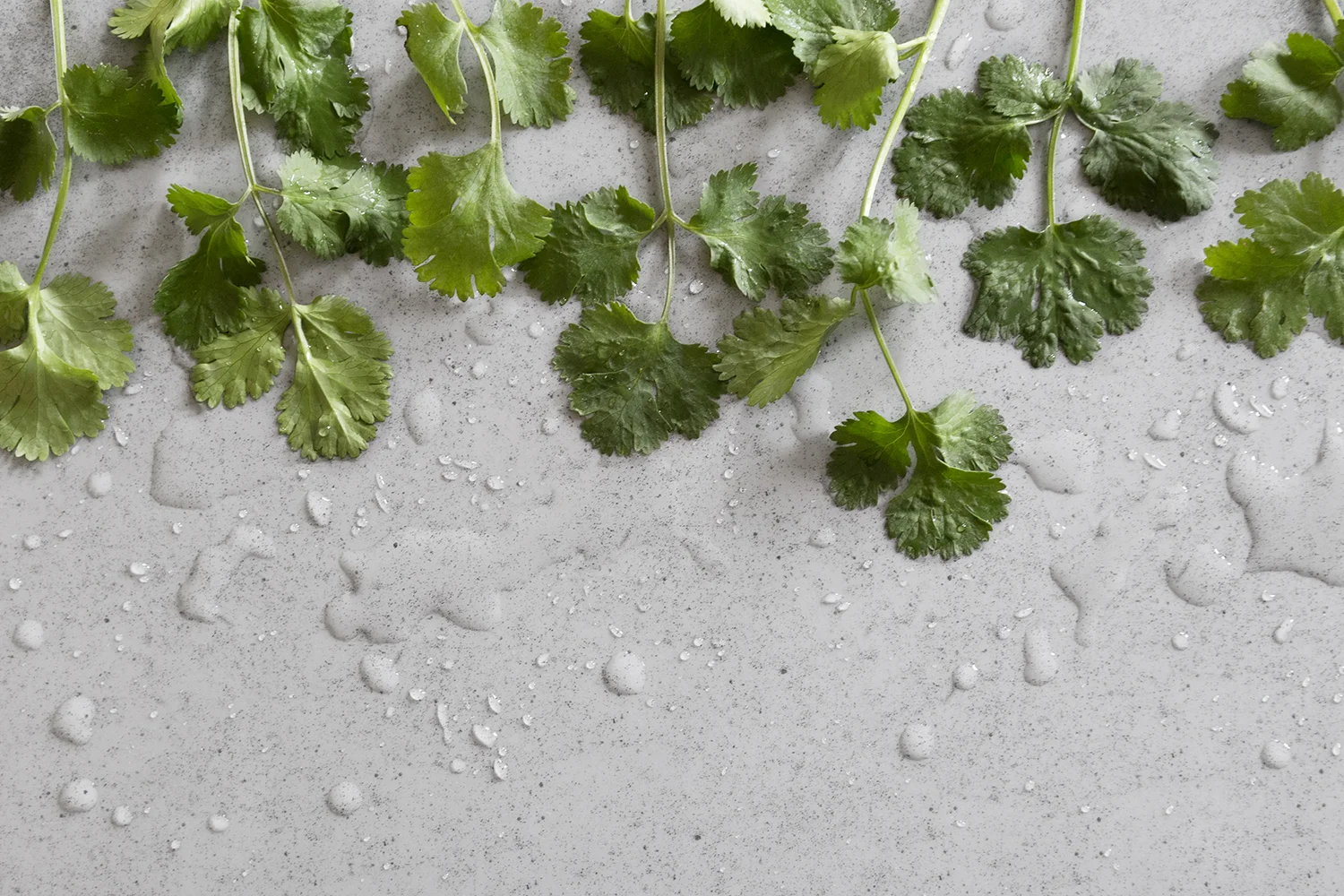
This is a story about cilantro. Simple as that. Or not? It’s about a green that polarizes humanity. An ingredient that steals the show, hijacks the flavor (and the aroma), hogs all the attention, and dominates the conversation.

“Oh, I’m sorry. I didn’t know you had a cilantro allergy.”

“No, no. It’s not an allergy.”

“What is it, then?”

**

Let’s clear the air, first. Cilantro is not like other greens.

It is not like basil, which gives freshness to a dish and seems humble about it.

It is not like mint, which transports people to salty air, sweet Mediterranean and Caribbean breezes, and sandy sunsets.

It is cilantro, and nothing else. One might call it: the weed of Satan, green death…

You either love it or hate it. You take it or leave it.

You pick your side and fight for it.

I don’t think there is any other green on earth that has inspired so much scientific research and also made scientists come together to study the animosity toward a single ingredient. (There’s an “I Hate Cilantro” Facebook page with hundreds of fans, a “17 Reasons Coriander Is Just the Fucking Worst” with thousands of likes, and an “I Hate Cilantro” blog.) My adversarial relationship with cilantro is so complicated that there had to be some backstory.

**

Actually, there was. Later on, I found that scientific results confirm that there is a genetic component to cilantro taste perception. They suggest that the dislike for cilantro may stem from genetic variation in olfactory receptors. Back in 2012, genetic testing company 23andMe sampled the DNA of nearly 30,000 people of European ancestry, who'd answered a survey about whether they loved or hated coriander. Out of the 11,851 participants who declared that they liked it and the 14,604 who insisted it tasted like soap, they found two genetic variants that were associated with the preferences, and the strongest variant was located within a cluster of olfactory-receptor genes.

**

First, I felt bad for it.

Could you imagine being cilantro? You’re cool by Asians, Mexicans, and South Americans. They love you. The can’t live (or eat) without you, and that feels amazing. You feel like a salt-and-pepper staple of their tables, where everyone calls your name and wants more of you. When it comes to Europeans, the scene dramatically changes. You make them vomit. You ruin their meals, their lives. How racist is that?

Even famed chefs in food history give you a bad name, gossiping about you all the time behind your back. (Or front. Whatever.) Like Julia Child: “Cilantro and arugula, I don’t like at all. They’re both green herbs, they have kind of a dead taste to me. I would pick it out if I saw it and throw it on the floor,” she responds to a question about foods she hated in a television interview in 2002 with Larry King. I didn’t think I had ever tasted it. Until, one day…

**

Flashback. Back to 2010.

The city: Istanbul.

The location: Various cool, hip, trendy cocktail bars.

The mission: Tasting different cocktails and deciding which one would be featured in a supplementary cocktail book that I’d been commissioned to write, called “50 Best Cocktails”.

Day one: Martini tasting.

I started the day like Bond, James Bond, having a sip from my high-quality, shaken-not-stirred martini in the morning with a clean-cut, perfectly-sharp suit, and I ended it like a trashy, messy Charlie Sheen. First, Cucumber Martini, and then Basil Martini, and then Thyme Martini, and then Cilantro Martini, and then… boom! I was the Charlie Sheen, all messed up and could not lift my head from the toilet, vomiting like a frozen margarita machine.

**

Back to now. Back to New York.

“Do you have any food allergies?” the waitress asks, almost knowing the answer, but still forcing you to say it.  

I’m on a date, and as a first date, we’re having a late brunch at Atla. Being in a very New Yorker place with a very New Yorker date makes me feel good and for a hot second I totally forget that we are at a casual and cool neighborhood restaurant, esteemed by Mexican chef Enrique Olvera. (Quesadilla! A kale tamale with tomato salsa! Tacos!)

If there is one thing worse than having an unpleasant food experience and ruining a professional eating career, it is the “repeating the same cilantro story over and over again for the rest of your life” part. It’s like being cursed by the gods of cilantro.  

For once, I want to have a nice, delicious, fancy dinner, and a pleasant date where there is no cilantro story involved. For once, I want a relationship where cilantro does not become “a thing”.

You know how it goes: It all starts early in the relationship with the cute “Oh, I’ll eat those green for you” or “Let me pick those out for you, so you can enjoy your dinner” moments, and over time it becomes “What is wrong with you? You are always like this. You don’t even have an allergy. But, you are so picky that you make big deal of it.”

End of a relationship.

The cilantro. Always a winner.

Or not?

**

The waitress at Atla comes back to the table with handsomely delicious dishes, marinated in… cilantro.

There we are again. The two of us.

Me and that sneaky looking weed.

When ordering our dishes, my reply to the waitress’ inquiry may have sounded like “No, not at all” But what I meant was: “This is war. Bring it on.”

Maybe I’m very judgmental.

Maybe it’s all in my head.

Maybe I do not have that gene and could actually enjoy the taste of cilantro.

(But even typing this sentence gives me agita, and also heart palpitations.)

There it is…

I have the first bite and close my eyes.

I imagine every precious, beautiful thing I’ve seen in my life, and I recall all the delicious, one-of-a-kind, life-exchanging food experiences I’ve ever had.

As I keep chewing, I use all the positive thinking tools that I’ve learned. I try to swallow, swallow and open my eyes…

“What’s wrong? Are you okay?”

“Well… There is something I need to tell you…”

The cilantro.

Victorious.

As always.

Wednesday 12.20.17
Posted by Areli Pino